Sunday, 22 December 2024

Ol' Harris Farm (minor adventure location)

My secret santicorn gift.

My prompt was: 'The party walks into an abandoned house full of 4d6 sprites, interrupting their holiday festivities.' I rolled a 5, 5, 5, and a 2.

Recent history

Years ago

Old man Harris used to live alone on his farm. He was a grouch and had very few visitors, but every week he would come to the market to sell excess butter and produce, and to yell at the local children to stay off of his farm.

One week he didn't show. When some went to investigate they found him dead on the floor of his barn, wearing his nightgown and clutching a broom. 

Ever since, strange things happen to those who come near the farm, so local people tend to stay clear of it despite rumours of Ol' Harris' hidden wealth.

Last week

Some of the town's children went missing. They were found sleeping near Ol' Harris' farm. After some stern talking to they admitted to going to the farm on a dare. What happened after they entered they don't remember.

Today

The sprites that have lived at the farm since Harris' days are holding their septanual banquet to celebrate the best pranks of the septanium and to grief capers gone awry.

The Sprites:

  • do not trust the big folk. These people have proven to be idiots by continuously falling for their pranks and you cannot trust idiots. However, if the offer is tempting enough they might reluctantly cooperate.
  • love pulling pranks on anything that lives. This is one reason the farm stays so clean: no creature willingly comes near these pestering bullies, so there are no rats nor spiders nor moths. If you'd rather something stay clean, they'll sully it; if you want to keep it close, they'll try to steal it from you and hide it.
  • are fiercely loyal when threatened. Despite all their infighting, all of them would go to bat for eachother, especially when the threat is a big person.

The Farm

An abandoned farm, most of which has fallen into ruin. Only the main house still stands, in suspiciously good shape.

The Land

Overgrown, the remains of ruined sheds and dividing walls peaking through occasionally. 

A path from the gate to the door of the main building is strangely accesible considering the rest of the land.

The Big House

The smell of roasted nuts and hearty foods surrounds the main building of the farm. There is enough of a clearing to walk arround it unhindered, allowing access to the back door as well as a view through the window of the chapel. 

The chappel window is big enough to climb through, though not while carrying a big backpack or a bunch of weapons.

The common room: Archery Tag

A room with a table, a comfortable chair. some stools and a loom with an unfinished piece. On the walls various wall hangings depicting woodland scenes (good condition). In the hearth embers smoulder. 

The south of the common room has a big door to the outside. To the west there is an opening towards the kitchen, where bickering voices are coming from. To the north is a door locked from the other side which goes to the bedroom, listening closely you can hear the sound of a liquid swashing around in a container.

On the table stands an inkwell with a clear liquid in it. This is a sleeping potion the Sprites have made. 

Underneath a loose floorboard lies a box containing a golden ring, a pair of silver earrings, and a lock of dark hair all carefully folded in a silk handkerchief.

5 young sprites are playing archery tag with arrows coated in the sleeping potion. No one is winning, as the sprites are all staying invisible so as not to lose. 

  • Pine: Little brother of Popler. Fancies himself the leader. Continously tries to tell the others what to do and readily throws around insults. Can't take any kind of abuse or he'll fly off trying to hide his tears.
  • Lilac: Hyper competive but has a soft spot for Pine. He can't stand losing and the slightest sign of anything other than his total victory causes him to complain that the others are cheating.
  • Linden: Tries to pretend she is too good for games like this, but secretly gets really into them. She finds Lilac incredibly annoying and can't help commenting on literally everything he says.
  • Dogwood: Linden's quiet sister and jealous of her popularity. She wants to play along but gets drowned out by the others. Eventually throws tantrums when she gets ignored for too long.
  • Popler: Is probably too old for games like these, but she feels overprotective of her little brother. Worries about Dogwood, but gets easily distracted by her loudmouthing brother.

The kitchen

A high table, modest stove and panrack take up most of the small space. It is spotless, the copper and steel glimmering in the light of the stove. It smells of roasted almonds and warm spices.

There is an opening to the east towards the common room from which you can hear yelling and a heavy door to the north which goes to the outside.

The larder is filled with a small amount of food (about 1 ration for a human sized creature). The kitchenware seems valuable given the immaculate shape it is in.

5 older sprites are bickering about how best to prepare the feast. Their situation isn't helped by the fact that most of them can't help but insert bad jokes which derail the conversation. 

  • Hawthorn: Insists on making a large stew is it is the most comfy meal, though secretly it is because she knows her daughter Popler won't eat anything else. She is uncompromising in her position and tries to get her spouse Ash to pick her side.
  • Birch: The youngest and eager to make an impression with her new recipe: Surprise soup. It is really just a stew, but she is unwilling to admit that and give Hawthorn her way. She continously mentions how much her brother Redbud loves the soup.
  • Chestnut: Talks down to the others, especially Birch, while he explains that the only correct sollution is to make a roast dinner. In fact, he's already put the almonds on, so why are they even still talking about this?
  • Yew: Demands to make a bunch of pies, sp everyone can fill them with whatever they like. The real aim is to create a situation in which everyone will praise his delicious pie and no one can steal credit, like Chestnut did last time.
  • Ash: Tries to get everyone to make a decision so they can move on to the far more exciting part of eating the food. He secretly prefers Yew's suggestion but is afraid to admit so while his spouse is present.

The bedroom

A room which seems to contain only two large cabinets. From one of them, hushed voices can be heard. 

There is a door locked with a latch on this side in the south from behind which shouting can be heard, To the east there is a heavy curtain which smells of incence leading to the chapel.

One of the cabinets is a box-bed. Other than it's current occupants, it contains two empty bottles, one bottle of caramel apple brandy (very strong stuff), a bottle of wine (gone sour) and the bottle the spires are currently drinking from.

The other cabinet contains bedsheets and spare clothes. They smell of vinegar (a prank the sprites have forgotten about, but would be very proud of).

5 older spirits got tired of waiting for the feast to start and have instead elected to hide away inside the box-bed and help themselves to some of the more potent drinks. They are currently working their way through a bottle of litteral moon shine (only fey can get drunk off of this, but it does emit litteral moonlight which makes it sought after by many). 

As they are all pretty drunk (or pretending to be so) they aren't really listening to each other and continue their own stories rather than responding to what has been said before.

  • Ceder: Telling embarrasing stories about his older brother Juniper. He is pretty sloshed, so he is trying to tell a story about how Juniper broke his wing for the fifth time this drinking session.
  • Redbud: Is complaining about how aweful his sisters new Surprise Soup is. He seems in real distress about having to eat it again and is low-key looking for advice. He is just drunk enough to be more panicked than he would be sober.
  • Hemlock: Boast about how big of a fish she rode last week. Everytime she mentions the size of the fish it goes up by a few centimeters. She is currently at 156 cm long. She has a nice buzz going, but will occasionally comment on how she doesn't feel anything yet.
  • Fir: Doesn't like boozing and is only here because she likes Redbud. She has been pretending to drink along with the rest of them and tries to fit in by talking nonsense while swaying heavily.
  • Juniper: Tries to get his brother to stop telling this story, but clearly can't handle him. He is on the verge of tears though too drunk to understand why he is crying if he inevitably breaks down.

The chapel

A small altar stands below a window, a copper insence burner on top. Wall hangings with religious themes decorate the two walls to the side. 

There is a thick curtain to the west from behind which occasional sloshing of liquid can be heard leading to the bedroom.

Behind the left wall hanging is a niche with a small golden idol. 

2 sprites are having a theological debate in front of the altar. Enamored with the wall hangings they have both converted to what they believe to be the faith that is depicted on them: the Star Lady who's blessing they seek and the Flaming Bull which will signal the end of the world. Their argument is about whether or not the Star Lady can see them during the day when the sun is out.

  • Spruce: No longer finding joy in the pranks she pulled with her siblings, she has found a higher calling. She still pranks, but now it is to bring a smile to the Star Lady up above. She believes the Lady must always be looking down on her, after all she wouldn't be much of a divine mother if she left her followers without her guidance half the time. She accuses Willow of being half of faith.
  • Willow: After a near death experience she believes she has seen the Lady in person. She now lives in her name, looking to spread the faith. She believes the Lady leaves during the day, after all everyone needs rest so the Lady looks after us when we are at our most vulnerable: when we sleep. She accuses Spruce of being in love with the Lady and wanting her all for herself. 

Tuesday, 12 November 2024

All Magic-Users are shamans

Spells are entities from a world parallel to ours. Some call them demons or angels, others the more neutral spirits or gods, but their names don't matter much. The mortal mind isn't made to directly interact with such beings, which is why most of us never realise our numerous encounters with them. This also means that, in order to contact these spirits to coerce, beg or trick them into affecting the physical realm we have to change our state of mind. 

The wizards want us to believe they rearrange their mental faculties through study alone, despite their avid use of narcotics being an open secret. It is the reason all wizards seem a bit loony, their minds are permanently at least partially warped so as to be able to access spells. For those doubting the need for stimulants to reach this altered state I would ask: if study is enough why aren't all scholars wizards?

Clerics reach this altered state through fanatic devotion. It is why there is no such thing as a moderate cleric: their fervent disposition is a requirement for their access to the power they call divine. The rituals function as a way to stir up their already excited minds to a point where they are completely out of touch with reality. And ofcourse, it helps that a lot of rituals involve opiates of some kind. 

Some minds are born askew. These folk have access to this other realm as naturally as most of us have to the physical. Such people go by many names: Lunatics, sourcerers, the dim witted, oracles and whatever other name there exists for a person who talks about things most of us can't see. They are a rarity, though that might be in part due to the reaction to their existence, both in this world as in the other. 

And finally there are those who are chosen. They didn't have innate affiliation with the magical plane, nor did they seek access to it. Instead, something from there has touched their mind, warped it to the point where it can commune with you. They are proof that our minds align more closely with the other world in our dreams, as this is where these beings tend to first appear to their victims. 

Thoughts

While thinking about animism in dungeons I found myself thinking about what magic would be like in an animist setting. Shamanism, as I understood it before doing some minor research, seemed like a good candidate, and one which I found exciting because of its subversiveness. There aren't many fantasy rpg settings in which I have seen shamans as playable options, often they are reserved for monstrous folk, especially if these are portrayed as primitive. 
Looking over some wikipedia stuff on shamans, it struck me as even more weird that shamans aren't some of the most commonly used magic-users out there. Integral to shamanism (from what I have read) seems to be the idea that you interact with spirits by entering an altered state of mind, either through ritual, the use of narcotics or both. I have seen the idea that spells are entities before (Arnold Kemp's GLoG wizards was the first place I encountered it) and wizards as drug-users seems to be a common trope in fantasy (my first exposure to this were the memes of Gandalf smoking pot, but it seems more prevalent in bleaker and weirder genres of fantasy).


Another reason I like the idea that using magic is merely altering your state of mind to commune with spirits is that it opens up the door to many different magical traditions. Both the way in which you alter your mind as well as the relation you have to the spirits you contact can be wildly different between different cultures, magical schools or systems of faith. The loony wizard slinging their spells around like tools seen in a lot of fantasy media, can easily coexist with a sort of hippy witch reaching out to local entities for help, like we see in the manga Berserk. 


Animism also lends itself particularly well to magical items. I love how items become magical as described in the blogpost Magic items are born not made by Ben Laurance, and an animist world would allow that to make sense very easily. Especially if you couple it with a belief that the ainu people traditionally have (at least according to wikipedia), that if an item is made with special care that it is endowed with a spirit of its own. A bit tangential perhaps, but I wanted to mention magic items and didn't think it was a big enough idea to warrant its own post. 

Monday, 4 November 2024

Animism and dungeons

A while ago I read the Ilias and the Odyssea by Homerus (probably not the English spelling, but English is my second language and I don't feel like looking it up). 

One scene, in which Achilles kills a bunch of people in a river, really worked its way into my mind. The river had a god (or maybe it was a god or both or neither, I don't know the specifics of ancient greek metaphysics as portrayed in these stories) who got pissed about the disrespect Achilles was showing by killing all these people in its clean water without any offerings given beforehand. So the river god tries to kill Achilles with a flash flood. And without a bunch of other gods looking out for Achilles that would have been his end. 

Achilles and the river Scamander by Alexander Runciman

This made me think of the concept of the mythic underworld. Most often I have seen it explained as the dungeon being an otherworldy place that hates the players and actively tries to oppose their advance. It is an interpretation of old school dungeons that tries to account for the weirdness that could be found in some of them, as well as the selectiveness with which certain obstacles affect those the dungeon (stuck doors never hindering monsters is one example of this that I have seen multiple time). 

The dungeon being a place particularly hostile towards PCs seems very similar to me to the river being hostile towards Achilles. So why not give the dungeon, each particular dungeon, a god/demon/spirit who resents the PCs for entering their domain and therefore actively oposses them. Just like the flash flood was out to get Achilles, so the stuck doors, the deadly traps and horrible monsters are out to get the PCs. It is deliberate, targeted and personal. 

To me, this would make sense in a world that is animist-like, with minor deities inhabiting basically anything. You could even do the Princess Mononoke thing and give these deities physical embodiments which can be harmed. Something about the players planning to take down the physical manifestation of the dungeon they are raiding seems really fun to me. 

Animism has facinated me for a while now, and I have been doing some thinking about how it coul relate to magic as well. I'll make that a separate post though.

Monday, 14 October 2024

GM Reflection: Attack on Kome Village

I've written a playreport for this session here in case anyone is interested. 

For the post itself I want to focus on what I did and what I can do better. My group uses 5e with some modifications (such as simultaneous initiative). Their level 1 PCs are from a smallish village and the adventure starts with an attack.  

Thoughts on how I ran the session

The idea for the attack is simple: a horde of burning zombies attacks the village, any buildings lost cannot be used and any NPCs dead cannot perform services for them in the future. So when the smith died, the players lost their ability to order new arms and armour and when the apothecary burned down they lost the stored potions in it. 

To run this fight I divided the smallish village into abstract zones. To go from one zone to the next would take an entire round of combat. This to prevent me from having to use exact feet or a grid to track the exact location of everyone. 

I knew the enemies would come from the southwest, so they had three zones they could 'start' in. For each I rolled d6 to see how many enemies would head that way. This worked pretty well, but I forgot two things: 

  1. Ranged attacks can hit the undead as they approach before reaching the village
  2. When do reïnforcements arrive?
To keep things abstract, I ruled that the hilly surroundings meant that the cleric could get 5 shots off with their crossbow (3 with disadvantage) before the undead would arrive. This worked fine, but having a better idea of how this would work in advance would have saved me some stress. 

I had the first wave of reinforcements approach 1 turn away from the town after they beat the first. For the third wave of reinfocements (a single undead) I rolled a timer die inspired by ICRPG (d4) to determine the amount of turns it would take. This ended up being too much cognitive load, so I had it arrive when I remembered it was still there. 

A system where I used dice to visualize where each group of undead was and how long it would take for them to advance would have been nice. Something to keep in mind for the future. 

Undead impact was determined on a d20 roll. n+5= npc in zone stays alive, n+10=building doesn't burn down, n is the number of undead. If a successful save is made by armed NPC they down 1 undead.

Undead only moved if an area was ablaze and devoid of living NPCs. I randomly rolled to see where they would go to next. 

Both of these procedures worked well, in part due to simultaneous initiative, which made it easy to track when a combat round was over. 

Lastly, one PC probably only survived because I was unsure of 5e rules for stabilized characters who are down. We decided that it would take their total hitpoints in 1 attack to die, but that made him borserline invincible. I don't mind them living, but the ruling I made was awkward. Next time I should allow myself a breather to think of appropriate ruling or just google the rule. 

Thoughts on the events of the session

I don't mind that most of the important buildings and NPCs are gone. It gives the choices of the players some weight. They were far less smart about it than I had anticipated though, two players constantly choosing to take passive damage by attacking the burning undead in melee or ending their turn next to them. 

I am genuinely unsure of how to deal with that in future prep. On the one hand, as someone neck deep in OSR style refereeing, I don't want to have to think about balance as such too much. Problems are for the players to be solved and they had plenty of options to try to more effectively defend the town. On the other hand, if the sort of problems I present to the players are consistently too difficult to solve effectively it really puts a damper on the fun of the game. As am educator I have been taught to present problems just outside of the confortzone of my students and I feel like I am currently not doing that for my players. 

Maybe I'll try to emphasize that actions outside of what is on the character sheet are not only permissable but encouraged. For example, I really enjoyed how one player looted the leather apron and gloves from the dead smith to protect themselves from the heat, so may'be I'll refer to that to make my point clear.  

One decision I am unequivocally happy with is to have leveling take a day in town. I have escalation calendars for the various problems around town and needed an incentive to have time pass. This change was well received and seems to work as intended.

Thoughts on where they're headed next session

They've chosen to investigate the tomb these undead probably came from. I have this one prepared already, but haven't though about travel to and from the tomb other than it being 'about half a day's journey'. Some impactful random encounters as well as some thoughts about navigation would probably make travel a bit more interesting. I'm already thinking of ways to attack parts of their character sheet that isn't HP.

Tuesday, 17 September 2024

a Troika! hack, why my campain flopped, how I am trying to fix the next one

    If you just want to see the Troika! hack go here

I recently started a new campaign with some friends. Earlier this year I ran a Mausritter campaign for them, but that fell apart because it didn't match their expectations of play.

The core points of contention at the time were:

  1. They experienced a lack of motivation for their characters to adventure. Part of this is a lack of external motivation. I initially told them to make characters that want to go on adventure because we'll play an adventure game and left it at that. Another reason for feeling this way was what they described as a lack of character based motivation. This is because the characters of Mausritter are fairly simple and don't differ as much from each other as 5e, which they are mostly familiar with. Add to that the fact that progression in Mausritter is very light compared to 5e and high lethality, both of which made it harder for them to invest in the desires of their characters.  
  2. They felt overwhelmed by tactical infinity. Being able to do anything meant they didn't know what they could do. Mausritter has no skill system and outside of magic tablets almost no fantastical abilities accessible to players without adventuring for them. They expressed that they missed the more clearly defined abilities and skills from 5e, buttons they knew they could press to get a reliable result. The fact that the Estate, which is the adventure site I ran for them, has lot of OSR problems (i.e. problems without one clear sollution and many possible sollutions) and a lot of 'unbalanced' encounters increased this feeling for the players.
  3. Some players expressed the desire to be able to take risks without being almost guaranteed to fail. OSR type games often assume planing compensates for the need to roll, having rolls primarily as a back up for when plans fail. But the impulsive nature of some of the players as well as the context in which we play (usually in the evening on a workday) doesn't match that playstyle very well. Mausritter's chance of succes for saves is low, even when compared with other Into the Odd based games, so rash decisions felt especially punishing. 

These are valid points, some of which we could have accounted for with a better session 0, but some of which they just had to experience to form an opinion on. 

Given the above I want to make sure this game takes these preferences more into account, while also still remaining a game I would be excited to run (because I am not writing a linear story for players to follow, I just don't find that enjoyable). 

So the criteria are:

  • Strong character motivations and relations to one another baked into the concept of the game.
  • Possible to run as a situation rather than a string of scenes.
  • A clear goal with more dilemma like choices to narrow down the tactical infinity.
  • A rule set that is more forgiving and more strongly suggests the kinds of actions your character can take.

This is what I ended up with:

Setting

PCs are from a small town, relatively close to major city which controls the straight between the Green and Grey seas (think Istanbul).

A long, semi-continuous conflict to control the city has displaced many and let loose many brigand companies on the surrounding lands (think 100 year war between France and England).

Local animistic traditions still exist, but are being actively pushed out as a more organized religion is expanding into the area. Both believe things like forest spiris to exist and that these can be dangerous, but the former tries to appeace them while the latter considers them evil demons that need to be conquered. 

The campaign would start off with undead attacking the PCs' home town, after which they will want to figure out what is causing this and how to stop it. 

System

I initially worked on making a Troika! hack, with 20 custom backgrounds and some rule changes to make all rolls roll-over (link to google doc TL;DR: skill rolls are beat or equal a 9 on a 2d6 only adding advanced skill, luck rolls are beat or equal a 13 adding luck which starts at 8 and reduce luck by one; also taking the modifiers out of damage rolls because I find them counter intuitive, and instead decrease or increase die size). 

I'd run it FKR, maybe even black box so the players would't have to concern themselves too much with the rules. Just know how to roll Luck, how to roll Skill and how to roll Damage and we would be good to go.

In my mind Troika! Also nicely fits my prefered complexity, while still giving players some direction on what they can do through the various advanced skills. And the backgrounds would allow me to tell my players about the world and the tone I like in an easy way.

Anyway, non of that mattered because we ended up using 5e. This is completely my own fault. I could feel that at least one player had made the assumption that it would be 5e, because they asked if they should make characters in advance which is hard to do without a specific rule set. Feeling the urge to please, I gave them the option of either something new or modified 5e. They chose modifed 5e. So again, it is completely my fault as I gave them the choice assuming their assumption.

The silver lining is that I basically have permission to only use 5e stuff I like and change eveything else (I already moved to simultaneous initiative mostly to streamline the action economy). And I guess I now get to find different folks to try that Troika! hack with and run the campaign set up again. So maybe more gaming without too much extra prep?

Also, if anyone is interested, here's a link to the playreport.

I don't have a statblock for the burnbies referenced, but used the 5e zombie without HP, damage instead goes straight to CON and roll under CON to see if the burnbie died (this replaces the IMO aweful con save mechanic 5e uses). They do 1 damage to anyone standing directly next to them at the end of the turn, and 1 damage to anyone dealing melee damage to them without a reach weapon. 

Thursday, 16 May 2024

Splitting the Overloaded Encounter Die

This is an idea I want to try next time I run a dungeon crawl. Completely untested, pure theorycraft. 

TL;DR: Combine Encounter Stew from Goblinpunch with Usage Dice from the Black Hack and (as the titel would suggest) the Overloaded Encounter Dice.

What:

For each active time sensitive resource you want to track, give it a Usage Dice and add them to a pool. So for example ongoing magical effects, fatigue, torches and lamps. Give chance for encounter and chance for finding tracks a dice in the pool as well.  

Roll the pool each dungeon turn. Rolling a 1 or 2 triggers the dice. So a 1 or 2 on the encounter dice is an encounter (I would go with a d12 to maintain the 1-in-6), for the tracks dice 1 or 2 results in tracks and for the usage dice for various resources they go down 1 size. Like with the Black Hack, a 1 or 2 on a d4 means the resource has run out (for fatigue, this could mean exhaustion or necessary rest, or whatever fatigue rules you want to use). 

So to clarify: You don't have a Usage Dice amount of torches in your inventory. When you use a torch it will burn for Usage Dice amount of turns.

Each torch would be a Ud6 (will burn on average for 5 turns), filled lamps could be a Ud8 (an average of 9 turns).

Fatigue gets a starting dice based on how rested you are. For playtesting I would go with Ud6 when camped and eating rations. Ud4 when resting suboptimal or having half rations. Ud8 when sleeping indoors or eating a freshly cooked meal. Ud10 for exceptional resting conditions like after a spa day at an elven resort of from gaining a divine blessing. As the dice depleats you can rest in the dungeon to restore it one step towards the starting dice of that day (if you start the day with a d6, resting in the dungeon can't get you to a d8). 

Magical effects can be modelled with a die appropriate to the spell. (Spell effects of an hour could be a d6, scaling spell effects such as GLOG magic could die step up depending on the dice invested in the spell, etc.)

Why:

I like abstract time, as described here on All Dead Generations, for the same reasons described there: Timekeeping is only very recently something everyone does to the minute as accurate timekeeping has become more accesible in current times. The dungeoncrawlers I play tend to not have these timekeeping methods, so why bother using exact time.

The benefit of abstract time, is that it allows you to abstract turnkeeping by using the Overloaded Encounter Dice. I really like the Overloaded Encounter Dice as almost every turn something will happen that will increase pressure on the players. 

However, a downside is that sometimes, a torch will go out immediately after using it, which feels bad. The same for immediately getting fatigued after resting. The orignal article tells the ref to ignore improbable results, but that takes some of the pressure off that I like from the Overloaded Encounter Dice. 

A second downside, to me, is that it only ever allows one thing to happen each turn. You will never run out of a torch just when you are being attacked, never become tired as your magical effect depletes etc. That means that I miss some potential 'of fuck' moments which I think could be fun. 

Finally, sometimes it is hard to fill six positions to make optimal use of the Overloaded Encounter Dice. Depending on your magic system, magical effects don't run out. Maybe you aren't running a dungeon which changes over time. 

I think the above might fix these problems: Torches will always sputter before going out, if you use fatigue levels (like I like doing) rolling fatigue doesn't immediately fuck you over, and there is a chance everything aligns absolutely wrong which I think is fun. 

Of course, you loose out on the 'something happens each turn', and there might be a bunch of other unforseen problems which will crop up as I try this out. But for now, it seems like a potentially fun alternative to the Overloaded Encounter Dice. 

Friday, 12 April 2024

How to summon a demon in 5 easy steps


Step 1: Finding a suitable host

As demons solely reside in the Dreamworld, they cannot manifest in the Wakingworld without a host. Fortunately, as almost everything dreams almost anything can host a demon. Unfortunately, the demon is limited in what it can do based on the host it resides in. So finding a suitable host is all about what you want the demon you summon to be capable of.

The most limiting hosts are simple elements. A demon possessing earth can do little more than cause the earth to quake, while a demon possessing a wind can at most create a storm. 

Creatures on the other hand tend to be quite potent hosts. Mundane creatures allow the demon to move around without much notice, while exceptional beasts add to the demon's excessive power. 

It is important to remember that it generally is harder to control a demon if it has a more potent host, so make sure to really give your choice of host some thought. 

Step 2: Getting leverage to bargain with

As a rule, demons do not willing subserve themselves. Almost always they'll want something in return for their services and almost always this will be disagreeable to the warlock who did the summoning. 

It is therefore important to have some leverage prior to summoning so you can tilt negotiations in your favour. The easiest form of leverage is torment. Each demon has something that is insufferable to them, so make sure you know how to torment your demon of choice. 

Alternatively, you can offer the demon something they might be interested in. Generally, demons have designs on the mortal world, and aiding them in these might entice them to grant you some form of service in return. Be aware that the plans of most demons tend to have negative effects for mortals, so discretion is adviced. 

Step 3: Setting up the contract

In order to control the actions of a demon you have to enter into a contract with it. Contracts can be drawn up on basically anything and in any language, but they are to be signed in blood or a blood equivalent. 

Remember! Demons are not so different from you and I: given the chance they will try to weasle themselves out of agreements they find to be disagreeable in some way. 

It is therefore best to assume that whatever demon you summon will try to exploit a gap or loophole in the contract you have set up with them. 

To prevent this from happening it might help to envision yourself trying to find your way around the contract, or you might as a friend or relative to read the contract over and give you some feedback. 

Finally, remember to put in somesort of fulfillment clause. Once a contract is fulfilled it is generally desirable for the demon to back from whence it came. This is especially true if you have chosen to use torment as part of the bargaining. 

Step 4: Preparing the binding

If you want to make sure that a demon doesn't just run off the moment you've summoned them to do its own thing, you might want to consider binding the demon. 

Very few demons are willing to stick around to voluntarily sign a contract. And why would they, if you give them the alternative to simply walk away?

It is therefore important to find out how to bind your demon of choice. A proper binding allows you to keep the demon in place and has the benefit of protecting you from the demon while it can still hurt you. 

Part of preparing the binding is choosing a location. As a lot of bindings are relatively easy to break by anything that isn't the demon, it is advicable to set up the binding in a controled environment, preferably somewhere private and indoors. 

Step 5: Performing the summons

Summoning demons requires rituals specific to the demon you have in mind. Often these rituals require expensive materials, such as rare herbs, precious stones, or delicately crafted tools. 

Make sure you have sufficient access to the required materials, as the rituals can be quite specific and it isn't uncommon to have to start over more than once. 

If you have carefully prepared the summons in steps 1 through 4 of this guide you should be adequately prepared to deal with the demon of your choice. 

Congratulations, you are now officially a warlock.


Credits:

https://goblinpunch.blogspot.com/2024/01/youre-doing-demons-all-wrong.html for making me think about this subject again and bringing the idea of tormenting demons to my attention. 

https://knightattheopera.blogspot.com/2024/02/e-monsters-at-opera.html for giving me the idea of natural disasters as sentient being. 

These demons are part of the same world I am working on for #Lore24

Resurrection: Having my cake and eating it too

Resurrection is a part of classic D&D that don't really love. 

For one, I don't like the gameplay implications. If resurrection is relatively easy, it devalues death. If it is somewhat hard, you get this weird situation where a player has to play a temporary character, or sit out one or more sessions, while the rest of the party tries to get their old character back. Both of these things might be non-issues for lots of folks, but it isn't something I enjoy happening at my table. 

Second, I don't like the worldbuilding implications. If resurrection is possible, it seems weird to me that powerful individuals or institutions haven't used it to gain even more power, using it on the regular or monopolising the single use item(s) that allow for it. Especially if you have elves and stuff in your games (or other very long living peoples), as there is no real reason for them to not have sought out these options. 

Moreover, on a deeper level I don't really like the implied metaphysics of resurrection. It seems to almost always suggest the existence of some sort of christian soul, which is the essence of what you really are and contains your personality, emotions and memories, leaving the body to be either merely a container for said soul, or an annoying filter interfering with it. This worldview bores me and as someone who has studied philosophy is hard for me to accept as consistent. 

On the other hand, resurrection gives the GM fun gameplay options. From recurring adversaries, to post mortem hostage situations. And I think you can create some really fun narratives with the 'they returned from the dead but are forever changed' trope. 

So with that in mind, here is a suggestion for having resurrection without having resurrection:

It is impossible to resurrect a person. However, it is possible to have a demon posses a dead person's body. When the demon is cunning and has had a chance to observe the deceased during their life, they are able to do a very convincing imitation of the deceased person. Which is why some belief resurrection to be possible and why people continue to attempt it. 

This fixes all my problems with resurrection and allows me to have the bits I like. 


Wednesday, 3 April 2024

Various parasitic Goblins

I like goblins, so naturally I want to do a rework of them to fit into the same setting as these dwarfs, elves, orcs and halflings I made. 

The TL;DR is: Combine these lines from a post by Arnold K. on hobgoblins:

'Goblins are right horrible little bastards, and everything that joins them at their table will also become a right horrible little bastard, too.

It doesn't take long.  A few months of goblin food will do it.'

 with this:

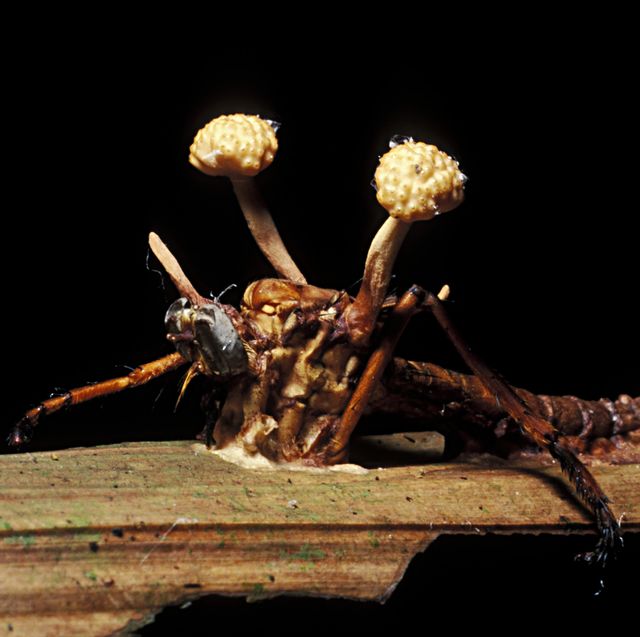
parasitic fungus, cordyceps sp, infests and kills insect host manu np southeast peru 

and you should get the idea.  

Parasitic Fungal Goblins

Goblin is a name given to a variety of parasitic fungi that infect intelligent creatures through ingestion and take over the hosts bodies. Most of the time, the infection makes the host behave erratically, which is why this is the standard image of a Goblin. 

After infection is complete, the fungus fruits to create spores to spread out. The Goblin variants that survive the fruiting stage tend to lose their erratic behaviour and are often described with different names like Bugbear or Hob. 

Most Goblin fungi are specialised and tend to target only a few specific creatures. Here are a few:

Bursters/Potbellies/the Gaunt

Targets: humans and halflings.

Onset: Emotions of the host become more intense and swing suddenly.

Progression: Host begins losing weight and become restless. Collective memories of the fungus start to torment their dreams or pop into their minds for no apparent reason. Memories of the host start to disappear.

Fruiting: The host's mind is completely supplanted with that of the collective goblin. Their bellies begin to swell as they begin to produce spores. The hunger sets in and goblins will begin to raid, pillage and steal foodstuffs. Once there are too many spores, the belly bursts open slinging the spores far and wide. If a swollen belly is cut or pierced, such bursting happens as well. The spores contaminate food and drink and if ingested cause infection.

Skinners/Beastfolk/Barfers

Targets: warmblooded animals.

Onset: Host becomes sedated, glassy eyed, and stops taking care of itself.

Progression: Skin starts to buldge and come loose from the underlying tissue. The host is incapable of much more than lying around.

Fruiting: All tissue beneath the skin is consumed and replaced with fungus. The fungal body can quickly alter its shape to appear as a person wearing the skin as some sort of costume, or to fit in the skin as the original creature would and move around like it would, or some stage inbetween. They reproduce by feeding creatures on their barf. To prevent persecution and because they often find their bodies uninspiring these goblins almost never pick intelligent creatures as hosts.

Scarabs/Pyros/The Masked

Targets: dwarfs.

Onset: Heat regulation destabalises causing sudden burts of manic activity followed by slumps.

Progression: Duration of slumps increases as manic episodes become more and more rare. Personality starts to deteriorate as the host continuously mistakes their own as well as others identities.

Fruiting: The host dies. Its stone corpse is hollowed out further and filled with a fungal body which is protected by the hard stone crust of dead dwarf that remains. They require heat to create spores but are unable to produce this themselves. For this reason they raid villages, burning whatever they come across and stealing away victims the goblins use as warm bodypillows when they rest. Alongside bodies for warmth they bring back foodstuff to keep their living warm water bags alive. As they tend to live mostly near dwarfs, this is their most frequent target for abduction. And as they shed spores they infect the wood they feed to their dwarf abductees, causing them to slowly turn goblin as well.

Perchers/Dark Elves/The Corrupted

Targets: elves (and orcs, but orcs are a kind of elf).

Onset: Original infection remains mostly unnoticed.

Progression: During liquification prior to elf fission, the fungi in the elf spreads a sweet, musty smell. Unless another infected elf is liquifying nearby, nothing else happens.

Fruiting: If an infected elf attempts to liquify when near another liquifying, infected elf, their liquification is halted. They will attempt to reach a high place where they glue themselves to the surface. Meanwhile, the fungus quickly develops a fruit, which spreads second stage spores. Because elfs tend to only liquify near each other when they merge, this behaviour tends to infect the elves as they are merged, where the fungus quickly takes charge of the fission process. The resulting "elves" lack empathy and self-reflection and are easily aggitated. This almost always results in sudden attack on nearby people. As these corrupted elves die, the first stage spores in their blood end up mixing with pools of stagnant water, where a thirsty elf might accidentally ingest them. 

Orc variation: As orcs can no longer fission after they are born, only their broodmothers can become infected, causing them to spread the same musky smell. If an infected elf happens to fission nearby it will trigger the same effect on that host: it will move up, stick itself down, and begin to grow a fruit with second stage spores. If these spores infect the broodmother, they will produce new orcs using all the mass available, dying in the process. These orcs suffer from the same lack of empathy, lack of self-reflection, and aggitation as infected elves.

Snatchers/Bugbears/Shedders

Targets: humans (preferably children)

Onset: Host loses their sense of decency and inhibitions.

Progression: Hairloss. Elongation of limbs and ears. Sensitivity to sound, which combined with lack of decency and inhibitions in general causes them to behave increasingly erratic.

Fruiting: Most of the body becomes covered in 'hair' which sheds fungal spores. A new personality replaces that of the host, the host's original life only remembered as some sort of weird dream. They will continue to live until the hosts body would normally die, aging the same way as well. This is why would be bugbear parents prefer to infect children, as it means their own offspring will have a longer life as a bugbear. Because they continuously shed spores, all food prepared by bugbears will cause humans to get infected.

Ettin Fruit/Hobs/Vestigials

Targets: humans, halflings, elves and orcs.

Onset: A small head grows out of the neck of whomever ate the fruit. It has a mind of its own and remembers all the previous times this particular fungus infected someone. The same fungus always reincarnates as the same hob.

Progression: Over time the head grows and as it does the goblin gains more and more control over the host's body below the neck.

Fruiting: Once the host body has been completely taken over, spores are stored in the body. When the body dies, the spores either linger in the dirt waiting to infect a nearby fruit tree, or disperse on hot air hoping to land on a nearby fruit tree. From the spore, a false limb grows on the fruit tree, with a fruit similar to the host tree but shaped odly like the Hob's face. Eating the fruit causes infection. For some reason, pests and unintelligent animals all ignore the goblin fruit. 

Implications

Everyone hates goblins. They rely more directly than any other creature on the death of someone else in order to exist. But once they do, some are perfectly normal individuals. I feel like this creates interesting dilemma's and adds some shades of grey to what most inhabitants of the world would understandably consider to be horrid monsters that the world would be better for if they died. 

It also creates a strange potential for goblins as biological weapons. Especially if war breaks out between different fantasy creatures, allying with goblins that don't infect your people seems like a valid strategy. I especially imagine elves might do this, as they don't like to get their hands dirty and seem the most likely to be weird isolationists. 

From a gameplay perspective I like that some of these goblins not only attack the bodies/HP of the players, but also part of their inventory. If you get goblin on your food or water, it is practically wasted, dead weight you might want to cling onto if you want to risk infection to stave of starvation. 

I think I would let players play as Hobs, Beastfolk or Bugbears if they really wanted to, but the other goblins are too erratic to be playable I think. A hob's body isn't really anything special, they basically get the body of their host and wisdom way beyond their years. A Bugbear has better hearing and longer arms. Honestly I think that is a valid distinguishing feature. When two weapons are of equal length, arm hits are equally likely, but when one person has longer arms they can hit the torso or head of their opponents way more easily, so that is something I might consider. Beastfolk seem like they are the most interesting, as they are basically a wildshape that are limited to a single beast form. Probably a bit strong, but I imagine they aren't particularly strong or fast in their humanoid form. I mean, imagine trying to fight while wearing a heron suit. Seems cumbersome. 

Finally, I really like mechanics that take PCs away from players without killing them. Something about reintroducing a fallen friend as an enemy is fun to me, even if it is also super campy. It is something I would want to telegraph and use sparingly though. Goblin food is basically a save vs slow death mechanic, which feels bad to spring upon unsuspecting players. Maybe I'm just a softy though.

Friday, 1 March 2024

#lore24: february slushpost

The setting as a whole is still nameless, but the main region my worldbuilding has focussed on so far has been christened: The Basilisk Bay. 

As we are at the start of another month, here's a summary of the February work.

  • Glowshroom Shine: Heavy liquor made from glow mushrooms. Glows faintly. Upon drinking your skin starts to glow for as long as you are buzzed.

  • Blastroot: a swollen root vegetable the size of a baseball. When punctured or cracked it blasts open with a loud bang, caused by pressurized gasses.

  • Shimmer Flute: A golden flute. Playing it causes surfaces the sound bounces off of to glow. Other than that it functions and sounds like a normal flute.

  • Hob Goblins: Infect hosts through fruit, which grows from a branch grafted on a fruit tree. The fruit looks like a member from the host tree, but strangely shaped like a head. At the start of infection, a small head emerges from the neck of the host person, with memories and a personality of many past lives. Slowly the parasite takes over more and more of the host body, until the original host is nothing but a head along for the ride on what used to be their body. Once the host dies, the spores lie dormant, waiting for a fruit tree to grow nearby which it can latch on to.

Unfortunately, this is probably my source for this idea
  • 6 known hobs:
    1. Ban: Sadistic, but cares for their future body. Sees causing suffering as an artform which they are trying to master over their many lives.
    2. Ro: Insecure, and wants badly to be popular. They have had many lives to learn to be charismatic, but as their aims are selfish and shallow, so are all their relations.
    3. Ly: Wants to feel bad about taking over the host's body. Tries to negotiate an agreeable transitional period, but are rude and hurried whenever good byes take too long. 
    4. Heb: Snobby, but with an incredibly aquired taste. Has grown bored of beauty and fineries, instead prefering fermentation, decay and offensive features.
    5. Ange: Compulsive liar, tells tall tales based on rumours and legends they heard in a prior life. If their host pursues any of the more dangerous tales Ange gets extremely nasty.
    6. Gur: Anxious mess, deadly afraid their future body will get hurt or expire prematurely and the will have to wait another indeterminate amount of time for another shot at life.

  • Even with the recently built Gullsroost Lighthouse to guide them, many ships wreck near the Basilisk Bay. An entire industry has sprung up around the wrecking of ships, from demanding tribute for rescuing the crew, to salvaging and plundering boats no one tried to save, to putting up false pyres during storms to get shops to wreck themselves on the coast so they can be looted. Be ware of any coastal town with many bishing boats and almost no fishing nets! (Inspired by this video about the Block Island wreckers)

  • Most Honest Herring: When in large schools, these fish seem to be able to understand human speech as they will direct those who seek aid. Unfortunately their name is ironic, and they always direct the needy towards the opposite of what they ask for. There is a folktale that the cabinboy of a ship distressed during a storm asked the herring to point towards their certain doom, and tricked them into pointing the ship to safety.

  • Gullsroost Lighthouse was build at the request of the Shipping and Traders Company to prevent the frequent wrecking their ships experienced. They payed for the lionshare of the construction and as a 'neutral party' oversee its maintainance and staffing. In return they got toll right and any ship that enters port after it has been outside of the Basilisk Bay has to pay the fee upon docking. 
     
  • The local Merchant Guild has joined the Shipping and Traders Company. As a part of this, most of the local members of the Guild have gone oversees to gain experience, while merchants from far away have come to the Bay to learn. As these folk only speak the Company tongue and whatever mumbling they call language back where they come from, they have a hard time integrating and the newfound influence of this 'foreign' version of the Merchant Guild is feared by locals. (Inspired by the historic Hanseatic League)

  • The bright light of the Gullsroost Lighthouse has disturbed gull nesting behaviour, causing them to move elsewhere. This has affected the work of egg and guano collectors as well as the lives of folks living in nearby villages, which are now plagued by gulls.

  • The Shipping and Traders Company has special tax exemptions, which they gained by aranging a special deal on handgonnes for the city watch.

  • The Forsaken Vanguard is part of a hireling army controlled by the Shipping and Traders Company. The Company buys up punishment rights of convicts damned to the gallows. The nooses they thought to escape this way are used to make enchanted collars, which will strange those who attempt to flee or forsake their duty.

  • Dirk Snitched is the unofficial commanding officer of the Forsaken Vanguard. Clearly punishing himself for some past mistake, Dirk has voluntarily served 5 campaings witht he Vangaurd. He is the only one to volunteer that many. On the battlefield he constantly risks it to save the lives of others in the Vanguard. He is build like a scar riddled ox, surprisingly quick on his feet, a mild demeanor and soft spoken.

  • Lea Cheated has served the most campaigns of anyone in the Vangaurd, but none of them voluntary. She has a gambling problem and always gets back into trouble because of it.
    Her knife fighting style is renowned, and often cited as the reason she has been able to survive this many campaigns. It is all about deceit, constantly tricking opponents into a false sense of security by faking maximum range, pretending to be hurt after an attack missed, and disguising what is really a short range knife throw as an out of distance swing.
    She currently only gambles with 'fun people' (i.e. people who don't get too upset if she is unable to pay them) as a strategy to stay out of trouble. The only way anyone has ever managed to become her student was bywinning all her money in gambling and having her bet her skills on winning her losses back.

  • Pith Dowell is chair of the Union of Thievery. Most consider them to be offputting, as they are incredibly direct and crass beyond belief. However, they are also extremely loyal to the union and its members, and fierce when defending them. Pith sees it as a challenge to alter how much people value things, either by undermining the assumpions that underly such beliefs, or by convincing folks of the merits of what they deemed worthless. Most of this is sport, but they'll insist it is to instruct new members on the maleability of value.

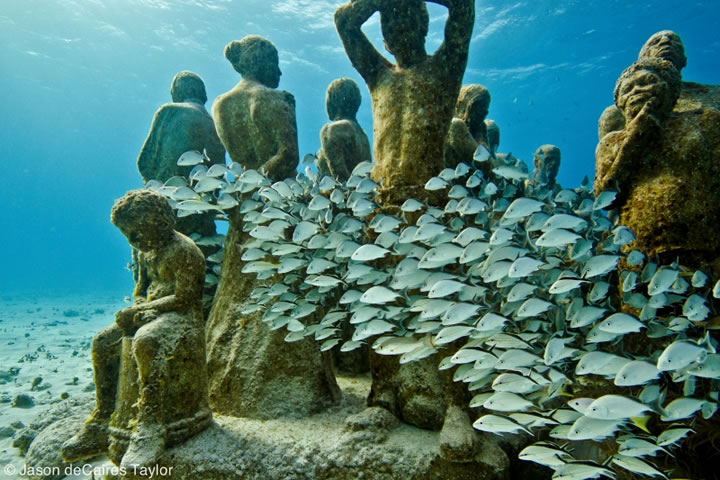
  • The seafloor of Basilisk Bay is covered in myriad statues of various creatures all facing the same way. 
  • The Dreamworld is a strange, chaotic parallel to the one we tend to call real. Wizards and witches know this source of Spells and Charms to be no less real than the waking world.
    As a real place, it also has its native inhabitants. They vary in shape and logic, making taxonomy near impossible. The only meaningful distinction to be made is between the benign Dreambeasts and the malign Night Terrors (also called Nightmares by common folk or Demons by warlocks). The former have no interest in the waking world, and dislike being forced to exist in it, whereas the latter are inamored with this rigid world in which they are more powerful than gods. They enter it, either through posession (which is difficult and thus rare) or by being summoned by a warlock.

  • Through contracts warlocks are able to manifest a Demon's power. However, the cost is often more significant than it might initially seem. Due to these onforseen potential costs, warlocks are looked down upon by both the Wizards of the Dream Academy and the Witches of the Hidden Coven.

  • Some dreambeasts will become familiars of Wizards, who use them to gather information in the Dreamworld. Wizards who have bonded with such dreambeasts are also able to temporarily manifest their familiar through a spell:

    Spell: Manifest Dreambeast/Partial Manifestation

    Manifest Dreambeast: For as long as you concentrate your dreambeast takes physical form and obeys your commands. Dreambeasts don't like it here, as our world seems non-sensical to them. When they are manifested they can be hurt and will immediately leave when this happens. If they survive their injuries, they will require time to recover in their own world.

    Partial Dreambeast Manifestation: For as long as you concentrate an aspect of your dreambeast manifests in the physical world. This could be its bite, sight, voice, hands, etc. and can be chose once the caster realises their spell will be only a partial sucess.

    Multiple (partial) manifestiations of the same dreambeast is possible, as the dreamworld is not bound by the same spatial concepts of identity as the waking world.

  • Fropple: Fruittree which grows on the edge of water, with half of its roots in the ground and the other half submerged. Eating tis fruit grands temporary gills allowing land creatures to breath under water. Squirrels eat them to raid fish eggs, horses to graze water grasses. If a young horse eats to many fropples they turn into a kelpie.
    The interference of these newfound gills with a creatures normal breathing causes most to croak at random intervals, hence the name frog apple, or fropple.

  • Wargs: When creatures kill a pack of wolves out of fear or hatred but for whatever reason leave a pup alive, this pup turns into a ward: an intelligent wolf capable of speech, with obsessive hatred for whatever species killed its family. Some work as lone wolves, others recruit packs of normal wolves, conspire with likeminded wargs, or even make alliances with enemies of the nearest representatives of the object of their vengeance.
    Sadly, warg behaviour, which is often the result of people acting based on onjust fear, often reinforces existing fear and hatred of wolves, or inspires it where there was none.

  • The Corpse Eater of Rattlemill is an urban legend featuring the villager of this town famous for its meatpies. According to the tale, when the village was suffering from plague, the people were unable to bring in the harvest of care for the beasts. So to stave of hunger, they used the meat of those who died to the plague in their pies. Since then, they have become immune to this terrible disease, which is why they haven't suffered from it since.
    The story is a complete fabrication, but residents of Rattlemill still sometimes suffer due to this prejudice.

  • Gooseflowers: A plant growing near water. Its flower like a cracked egg, when polinated fuses together. After a while a goose hatches from the petal egg and swims away. When eaten, the seeds in the goosefruit start growing inside the creature that ate it, causing extreme thirst, and killing their host. From the ground fertilized by the corpse a new Gooseflower grows. 

  • A Giant Sea Serpant uses the Basilisk Bay as a creche for her spawn during summer. When the Submerged Island emerges, it gets trapped in the Bay and starts to get hungry.
    Prior to giving birth, the Sea Serpent and the father of her babies drive a whale into the bay, where she kills it to feed upon it together with her offspring. Many other fish flourish in the Bay due to this increase in available food. The Sea Serpent is such a regular visitor that its coming is celebrated by locals, who fear and respect the creature as a near divine entity.

  • Curtle Swoon is captain of the Knights Joyous in the Basilisk Bay.
    On first impression he seems friendly, warm, and charismatic. However, he is zealously intolerant of any negative emotions and will yell at you with a manic smile to 'cheer up' and 'do something about it' whenever you show sign of distress. He is agressive, toxic positivity personified. 

Thoughts

The bay is starting to take shape a bit more in my mind due to this challenge. I write up a lot of weird creatures and plants I notice. The NPCs are usually low effort quickies, as it feels easy to me to come up with a character which embodies one these institutions and the institutions have already been made for a previous project. 

I notice that I had hoped that this challenge would help me get a regular writing habit. Instead, I tend to do most of these in a paniced hurry as my partner and I lie in bed and she would much rather we go to sleep already. Perhaps that is fitting given the name I go by online.