Wednesday, 31 January 2024

#lore24: Januari Slushpost

Though I failed to maintain #dungeon23, I am back again to attempt a daily rpg creation challenge. #lore24 is a challenge where you write up some worldbuilding for a setting, new or old. This seems much better suited to me for a daily challange, as bits of lore don't have to connect directly to previous bits, can vary in kind so they aren't all rooms (like #dungeon23) but can vary from places and items to factions and people. 

This is made for the same world I've been making fantasy creatures for in some of my previous posts. 

So, here's a summary of januari (not formatted by date, because some ideas got several days of attention):

  • Dwarven ruins located in an inhospitable wasteland with no signs of any life. This huge fallen metropolis ran out of oil which was the foundation of their food source. Now only a ghost town remains.

  • Elven oracles store information for the community in their bodies while locked away in sterile vaults. Body parts are send in after sterilization to add to the corpus of knowledge. They send out knowledge through their own bodyparts whenever circumstances force the elves to merge and lose their individual knowledge.

  • Goblin are invasive fungi which infect you through ingestion. To procreate Goblins have to get you to consume spores. The early stages of infection are erratic, causing stereotypical goblin behaviour.  Their are various kinds of Goblin, each with different signs of infection, behavioural disprution during onset, and fruiting bodies. Many goblin bodies die as they fruit, but some mature into fungal-animal hybrids in which the fungus maintains stable control. These are often so different in their behaviour to the early stage 'goblin' that they gain different names, such as bugbears and hobs. Due to this parasitic nature of Goblin fungi, few people tolerate them as close neighbours. Often, they are seen as a scourge by and actively hunted. However, sovereigns have many times formed tennous alliances with goblin folk to destroy common enemies, with the promis of a goblin enclave and a stock of host bodies as a common part of the deal. (Inspired by goblinpunch goblins from this post and this Ze Frank video)

  • Burster goblins target humans and halflings. Initial infection causes emotions to become extremely intens and shift suddenly. Memory and personality otherwise remain intact during this phase. Over the course of infection the host loses weight and becomes more and more restless until their original personality completely disappears. At the same time, collective memories surface in the mind of Goblin: work together with your kind or suffer like the others who chose solitude, capture halflings and humans alive to secure our future. Around this time the fungus has started to make spores in the belly, causing it to swell while the rest of their bodies have become gaunt. Their name comes from the endstage of infection: once their host body has become to weak to continue carrying them, their bellies burst open, flinging spores everywhere with the hope of infecting as much food as possible. Even before this final stage is reached do sharp attacks against the creature cause its belly to burst and spores to cover its assailant, with the hope of contaminating their food.

  • Bugbears target humans exclusively, preferably human children, which they raise as their own once the stages of infection have been completed. Once infected the hosts lose all inhibition and decorum. As infection progresses, lims and ears elongate, hair starts falling out, and hosts become increasingly sensitive to sound. The final stage of infection causes 'hairs' to cover the body. These contain spores that drop when the bugbear scratches itself. Only at this stage does a new personality develop, which remembers the hosts life only as a faint nightmare they are glad to have woken up from, looking back on their "goblin phase" as embarassing adolesance. Their intelligence is similar to that of their host. (Inspired by the folklore bugbear which kidnaps children according to wikipedia)

  • Perching goblins infect elves and orcs (which are basically elves). Because elves only merge once every few hundred years (or even less often if possible), the spores remain dormant in still water, infecting elves who drink it. There is little to no sign of infection of these elves right up until they prepare for merger. When elves liquify for fission or merger the fungus releases pheromones which cause rapid fungal growth in another infected elf. This rapidly deforming elf does not liquify and instead tries to get high, settles in place and starts to fruit a mushroon. If the timing is forgunate for the Goblin, their spores rain down on the merged elves, infecting the whole lot of them. From now on, the fungus enters a different stage. The elves which emerge from infected merger have increased aggression and decreased empathy and selfreflection, as well as false memories of being slighted by their neighbours. The result is almost always a sudden, brutal war the corrupted elves almost always lose. As they bleed out on the battlefields, their blood infects water where the spores lie dormant for future infection.

  • When dormant spores of perching goblins manage to infect an orc broodmother, she starts to release pheremones as well. If an infected elf is near, this will trigger a similar perching behaviour as it does when elves merge. Only after active spores make it into the broodmother, she mass produces corrupted orces (same as corrupted elves), causing her to die.

  • Garment goblins target warmblooded animals. They infect hosts by barfing food in their mouth, after which they consume the body beneath the skin almost entirely. With incredible speed, these goblins are able to alter their mass distribution, allowing them to i) wear the skin of their hosts much like those originally would and using their abilities accordingly, ii) take on a bipedal form wearing their host skin more like an ill fitting suit, and iii) anything in between these two forms. Though these goblins can technically infect humans and halflings, most of their communities found it not worth the retaliation humans and halflings tend to inflict upon them. Also, compared to flying herons, strong bears, and swift deer, humans and halflings are kind of boring. (Clearly inspired by the Boy and the Heron). 
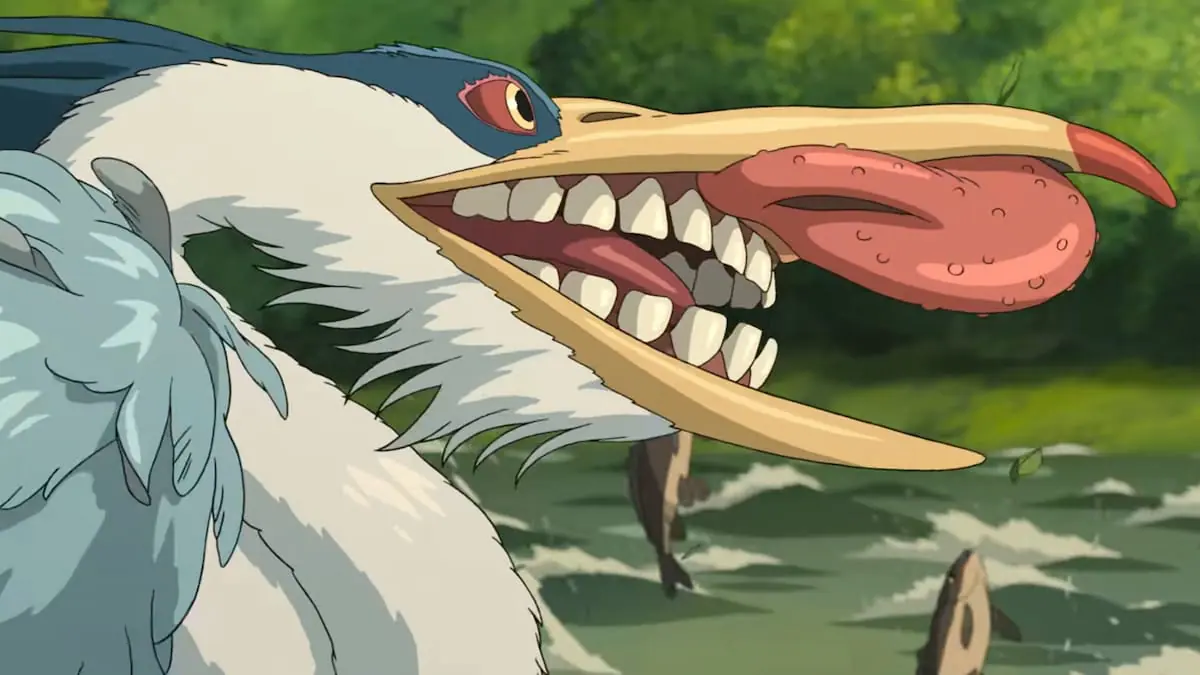
The Boy and the Heron Explained: Studio Ghibli's Storytelling
  • Stone goblins infect dwarfs through contaminated wood. Like garment goblins, they quickly kill their host, hollowing out the dwarfs body as their fungal body develops, leaving a stone shell to cover their soft bodies, which shrivel away in sunlight. They require warmth to grow and reproduce, which they do not produce themselves, causing them to capture dwarfs and warmblooded creatures alive, and burn down camps and villages. They also hoard dead wood to build pyres and feed to captive dwarfs to keep them alive. When they rest, they cuddle captives as if their body pillows, using the body heat to grow in size or to produce spores as they sleep. As they infect the wood they feed their captives, they continuously have to find new warm bodies.

  • A halfling village with a single mother queen. Folks living here seem normal enough, but have cult like tendencies to go to extremes for 'the greater good'.

  • Griffins can sense gold because: i) they need to display strength to attract a mate and gold is covetted by powerful entities and groups, or ii) because they are the king of beasts and gold is the king of metals, or iii) maybe the queen of metals? Do griffins fuck gold to procreate? Or iv) do they eat it to make golden griffing eggs? Or v) do the males use gold to make nests to attract females like some paradise birds use blue? (This is all one day's entree. I've been tired a lot).

  • A society of orcs that has deified their broodmother. Fancy ornamentation surrounds her. Feeding her is a huge ritual.

  • A society of orcs that has depersonalised their broodmother, seeing it as a biofactory which produces orcs as long as you provide raw materials.

  • A strain of Goblin that takes over the central nervous system by not the brain. Victims are like the victims in Get Out: only able to watch as their bodies are used by the fungus to erattically destroy everything around them with the goal of spreading spores.

  • Elves make sentient objects by incorporating their own flesh into them, creating an object that is like a close of the they are themselves at the moment of creation.

  • Dwarves make sentient objects by freeing them from the stone much the same way they free other dwarves, creating unique persons in object form.

  • Gilly Reefwalker sells trinkets scavanged from sunken ships they reach by walking the seafloor in their submersion suit. They ask for compensation only because they know it is expected, though really they don't care for money. What they do want is for someone to listen to their stories: each recovered treasure a tale. Gilly doesn't stare out their wares. Potential customers ask what they have in store, upon which Gilly produces one item at a time, leasurely telling you the details of where they found it, what they think it is, etc. only proceeding to the next item once the story of one item is done. Interruption or attempts to hurry offend. Gilly would always rather nothing than sell something to someone who 'clearly has no real interest'.

  • Gilly's treasures: 
  1. Bottle covered in whisperpocks: stores one whispered message at a time.
  2. Treeshells: sound like wind through leaves when raised to one's ear. 
  3. Horrorscope: Cracked telescope that shows the greates fear of whomever is looking. 
  4. Leviathan line: Unbreakable wire.
  5. Messbell: all who hear it become incredibly hungry. 
  6. Brinewine: loved by collecters, salty profile. 
  7. Dimensional porthole: open the window and salt water comes pouring out. 
  8. Rustlas: rusty cutlas, rusts away other metals on contact. 
  9. Blood pearl: Cure against anemia, beloved by vampires. 
  10. Tridentures: Trident carved from seemonster tooth, seeks flesh eagerly during combat. 
  11. Cursed pegleg: All who touch it can only use salty language.
  12. Damp lantern: Only shines when wet. 
  13. Calamity compas: points to where the nearest natural disaster will be. 
  14. Sea idol: Mummified sea elf; contains memories of ancient sea elf society.
  15. Hag slime: apply to be super slippery and immune to magic.
  16. Wind catcher: Sack made of sails of the fastest ship in history. Can capture gusts to be stored and released later. 
  17. Water resistant log: logbook of waterproof material. Half filled detailing a harrowing tale of a crew facing certain doom at sea.
  18. Sappin net: incredibly light, byt feels unbearably heavy to those trapped underneath. 
  • Gilly's shack is a patchwork mess of shipwrecks and driftwood. Closer to a midden than anything that could be called a house. When Gully is home they are either sorting through their posessions or working on diving equipment to get even further out into the water. Most of the time, however, Gilly is out hunting treasure or oily fish they use to make food from.

  • A sunken island covered in ruins resurfaces, weird fish mosters attack the nearby shores. As it resurfaces a ship gets stranded on it. PCs are on it and have to fight their way off towards a smaller fishing vessle that ran aground closer to shore.

  • The Academy of Dreams seek to maintain their independence through the hoarding of arcane knowledge. By maintaining their monopoly they hope to stay safe of persecution.

  • The Hidden Coven aims to make life of commoners bearable, both now and in the future. Their cures are ruthlessly pragmatic, targetting the root cause. This makes them very impopular with those in power (who the coven often deems the root cause of a lot of suffering).

  • The Joyous Knights wish to bring happiness to all and to eradicate sadness, no matter the cost.

  • The Wilderness Wardens are sponsored by well meaning nobles to protect the status quo, while being a 'neutral' force for 'good'. Monstrous threats that upset the balance need to be eliminated.

  • The local base of the Wilderness Wardens is a large hunting lodge. Walls of the main hall are crowded with hunting trophies of celebrated members.

  • Wart Tongue Atris is senior warden at the lodge and overseens initiations. She is rumored to have tasted over a thousand different kinds of scat and can still describe each of them in nausiating vivid detail. Her knowledge of creatures is encyclopedic, but her specific interet means that no one voluntarily sits next to her during banquets more than once.

  • Snake Eyed Jurgen is quartermaster at the lodge. His long canines, ashy skin, cold touch and titular snake eyes make him offputting to most the first time they meet him. He is also a very strict quartermaster, demanding good explanations for each item requested and his companion, Cane, helps him guard the stock closely. Really a big softy that just wants to do his job as good as possible. Quickly warms up to anyone who shows him kindness. (Coldblooded creatures heat up through external sources, it is weird we use it to describe someone who stays cold even when treated warm).

  • Basper the Hidden Master is a halfling huntress using a spear. She greatly prefers the freedom of the outdoors, especially hard to reach places. To her, life is about proving yourself. This means so few people have ever seen her that descriptions vary wildly. Some suggest she is just a legend, or already dead. She stands short, even for a halfling, with hair clumped to her head, skin cracked like bark and a layer of insulating fat hiding her bulging muscles. When she isn't hunting, she listens to the gossip of local vegetation. Basper will only train those who prove themselves by completing some unreasonable request and show proper respect to plantlife. (This is meant to be a way PCs can do martial training in their downtime like described in this marizian's garden blogpost).

In Sum

I started with random ideas, tried to make some goblins which need some polishing before I make a dedicated post about them, got inspired to make a weird dwarven treasure hunter, which made me want to make a location I could put them in. If this focus on this one area remains I'd love to run a game in it some time. The funnel idea I had seems like it could be cool and gives incentive for the organisations to want to recruit these people: They know more about the weird island than anyone else.
Sunday, 14 January 2024

Grasping at straws: New years resolution system

Didn't think I would respond to this challenge, but woke up this morning with an idea that would fit this, so here I am.


Grasping at straws:

  • Whenever a PC does something dangerous they pull a straw, cord, twig or something similar from a bunch with one which is noticibly shorter/different while they cannot see the odd one out.
  • Each long/common straw they draw is discarted.
  • If they draw the short/different one, they are fucked. 

Variables:

Straw amount: 

The obvious way to tailor this resolution system to your needs is to vary the amount of good straws vs the amount of bad ones. 

The initial baseline you set will say something about how dangerous the world is/how capable the PCs are.

Varying up straw amount within a game will allow you to basically approach all die rolls, but in a shittier way if there are lots of different probablities, as you would have to have different bushels or count out the odds before each draw. 

However, you could have each PC have their own 'hand' and vary amount based on level (lower levels, worse odds), class (wizards have magic, but get in trouble faster), background (more skills = more lived experience = fewer good straws), etc. for more stable odds (less work) with varying odds for different characters. 

Straw recovery:

Another lever you can use is straw recovery. Depending on when you recover straw it starts to represent an abstraction of different things. If you never recover straw it might represent the luck of the star you were born under, if you only recover it in a safe place it is closer to your endurance, if you recover each time you fail it is more a narrative pacing device, and if you recover each conflict it represents your ability to get the better of your opponent. 

There is also no reason to assume straw recovery is instantaneous. Maybe you regain one straw for each way you spend in a safe location, rather than a set amount of time for recovery in general. Maybe you regain one straw for each sacrifice you make at the temple of your guardian spirit. This too says something about what is being abstracted with the straws.

Thougths

I think this would work alright. It doesn't really do anything particularly special: changing the amount of good straws vs bad straws is not inherrently different from changing the probilities on a dice. The only novel addition is that each succes increases the likely hood of future failure, though this is something you can simulate in other ways. Beggar's Choice, a small, free game by Adventures Buffo, does this by literally counting how often you try something risky. 

However, I have argued before that form and content both inform the experience. I can imagine the russian roulette-like effect feeling quite different from rolling a die with different probabilities each time. Each succes brings you closer to certain failure. For this reason, if I would ever use this, it would be in a game where desparation is a big part of the PCs experiences, though I think the chance that I would ever use this is small.

Sunday, 17 December 2023

Half of what? A fictional etymology of 'halfling'

Written for the same as of yet unnamed world that my stoneborn dwarfs, slime mould elves, and elf-made orcs inhabit. 

Introduction

Many have speculated about the origin of the term 'Halfling'. Each of these speculations is of interest to us, because they reveal various aspects of the beings referred to by this term as well as the various way communities have related to them. 

What is interesting in each of these various origins is that by definition, 'halfling' is a relational term. It is the 'half' of something with is 'complete', or 'full'. It is this latter aspect that the various proposed origins of the word refer to.

The following origins each vary in both their popularity as well as their plausibility. We will comment on both, though we feel it necessary to start with the following disclaimer: This piece will not attempt to provide a single correct etymology, as there are in the opinion of the authors insufficient credible records to undertake such an endeavor at the time of writing. 

1. Half the length of a human

The most popular and least likely origin of the term refers to the halflings' average length in relation to size of an average, adult human. It is not uncommon for humans to see the world solely through the lense of their own existence. After all, some of them have at one point attempted to proclaim themselves 'the measure of all things'. 

Halfling length is one of their more easily observable qualities, and it is surprisingly consistent, as they stand between 90 and 100 cm for most of their lives. Compare this with elves, who come in all sorts of shapes and sizes, dwarfs, for whom size varies mostly on the availability of sustenance at the time of liberation, and even humans, who not only vary significantly in size throughout there lives, but also between various groups and, on occasion, particularly tall or short individuals.

However, the above is also why this origin of the term is one of the least likely. Dwarfs, elves and halflings themselves use the same word to refer to these beings. The inconsistent size of elves, the fact halflings are about two-thirds the length of most dwarfs, and, most damningly, the fact that halflings could not possibly be half the size of themselves makes this proposed origin an unlikely candidate.

2. Half the appetite of a human

An interesting variation on the above is based on the observation that halflings on average consume about half the food and drink of an average human. It suffers from the same problems as the above, but is worthy of note because it tells us something fascinating about halflings that might escape the notice of most:

Halflings, being half the length of an average adult human are only an eighth of the volume and (being made of the same elements in similar proportians) mass of that same adult human.

The fact that halflings on average consume not an eighth but half of what an average human consumes, means that for their size halflings eat four times as much as humans. And need to produce four times as much as well. 

This might seem like a throwaway fact, but will be of importance to understand the following proposed etymology. 

3. Half of a parent

Human offspring is often an object of fascination and ridicule among elves, dwarfs and orcs alike. However, halfling offspring is not only similarly helpless for a comparable amount of time, they are far more demanding, both on the parent's health delivering the child as well as on the providers. 

To safely birth a halfling child, the carrying parent needs to attain a size capable of carrying the relatively large offspring without crushing their organs during pregnancy, or causing severe rupturing during labour. For a prolonged period the parent will have to 'eat for two'. While in this 'reproductive state', the carrying parent is unable to perform many other tasks, thus being a significant drain on community resources while contributing relatively little to the acquisition of these resources.

The level of altriciality of their offspring, combined with the toll childbirth takes on the carrying parent causes most halfling communities to be able to support only very few child-carrying parents at a given time, and due to the investment required to be able to carry halfling children, carrying parents often remain in that role for more than a single pregnancy. 

Various halfling communities are structured around this distinguishing reproductive quality. In some cases the carrying parents find themselves at the top of a community hierarchy, concerning themselves with matters of economy and law as a way to contribute. Other times they find themselves at the very bottom of society, reduced to 'breeders' for the community. However, in nearly all cases other members have to contribute to help take care of the carrying parent as well as the child once it is born.

This has caused some to speculate that the term halfling is used in reference to the role a member has in the contribution to the parenting of young children. Those individuals we encounter are almost never currently pregnant, nor are they preparing for pregnancy, thus those individuals are all 'halflings' as opposed to the parent who actually gives birth to the child. 

There is some precedent for this: at least one halfling community in the Lower Dales refers to pregnant members with the prefix 'most whole', but it doesn't seem universally applicable and has no further evidence to support it.

4. Half civilized

The final etymology we will consider in this piece comes from a chapter on halflings in the propaganda piece 'On the inferiority of the Demihumans' written during the infamous Genocides of the Free Cities. In it the authors present their reasoning as to the inferiority of halfings to humans as such: "Halflings don't wear shoes, unlike civilized folk. However, they do wear clothes like civilized folk. Ergo, halflings are called such because they are only half civilized, i.e. somewhere between dumb animal and proper person." We think it goes without saying that this line of reasoning is not only childlike, but that the conclusion is blatantly false, as is to be expected of a piece of writing bearing the much frowned upon slur 'demihuman'.

This chapter in 'The inferiority' is the only source that proposes this rediculous etymology, but it does inadvertently touch on something interesting: Why do the halflings often forgo footwear that protect the soles? It turns out that halfling feet are different from those of humans. It is in fact one of the only biological differences between the two creatures other than average hight difference and appetite: Able-bodied halflings can hear through their feet, specifically low sounds that can travel quite far through the earth. No one is quite sure how it works, though they seem to share the feature with large animals from the steppes called Olifantens. 

Tangent: Combined with their relatively low weight, their ability to hear through their feet is often considered an explanation for another halfling trait: comparitively exeptional sneaking skills. Given the same amount of training, halflings seem to be better at moving about quitly than any other creature of similar size and weight.

Thoughts

Halflings/hobbits are hard to make interesting, because Tolkien seems to have invented them to be anything but interesting. They are small humans, from what I have read literally (as in they are the same species), who above all do not have an interest in adventuring. Except for sometimes, when a few of them do.

This aspect, that most halflings/hobbits are primarily interested in provincial pleasantries, but that on occasion an individual gets infected with uncharacteristic wanderlust, was hard to find an analogue for to use as a basis for making them more interesting. Until I started thinking about eusocial animals, like bees, ants and naked molerats. 

Members of these species focus primarily on their own hives/families, i.e. like Tolkien's hobbits their focus is incredibly local. However, it seems that to prevent too much incest, every once in a while some of them (often males) go out into the world to find different groups to mingle genes with, which seemed very similar to the stereotypical 'wanderlust' stricken halfling/hobbit to me.

The problem is that eusociality has similarities to some rather messed up social structures from history, and making behaviour like this innate for intelligent creatures is often frowned upon as well as it mirrors real world racism. Making halflings completely eusocial therefore seemed a bit iffy to me. I was afraid I would very quickly end up in what I'll call 'Harry Potter house elf' territory. To get something akin to the stereotypical 'hobbit' halfling, I tried to only universalize the preconditions for evolving eusociality (according to wikipedia). This way I, hopefully, allow for enough variety between cultures and individuals to stay clear of the aforementioned 'HPhe' territory. 

After getting that far I noticed that halflings were still too much like 'small humans' to me to be funny. So to make them slightly more interesting I tried to make sense of the 'no shoes' thing by taking inspiration from elephants and Toph from Avatar the last airbender.

The halflings are currently my least favourite of the creatures I've made for this world. So they might very well change or be removed entire in the future.

Thursday, 15 June 2023

Orcs: an Elven mistake

We write this down so those who follow can take it as a warning. What you have been told about orcs is mostly false; fabrications to save the dignity of our people, and to stir up the vile required to hopefully right our wrong. Here is the truth: Orcs are corruptions of elves, made at the hight of our hubris. They are our biggest mistake.

Sunday, 4 June 2023

The Sanctuary of Knowledge: dungeon and play report

For the first/zeroth edition of FKRCon I wrote a small adventure for 2nd Age, a setting communicated through twelve classes.

It featured the remnants of a religious research facility, with decrepit immortal monks, a mutant who believes she is an angel, strange magic gone awry and squealing mutant fetuses. I wrote up the dungeon in this file

Thursday, 25 May 2023

Anouncement: 2nd Age is coming to FKRCON 26th-28th of may

This saturday (27th of may) I'll be running a 3 hour game of HUD-less/black box adventure gaming from 19:00 to 22:00 CET for 2-6 players. The adventure will be set in the 2nd Age (free on itch.io), a project I worked on with the brilliant Adventures Buffo. You can read some more about 2nd Age and my GMing style in these blogposts. 

If you are interested in joining my game or any of the other games that are organised for this digital con, join the FKR collective discord via the link in the poster.

About the game I'll be running:

The setting:

  • The time period is faux early industrial Europe. I strive for bleak whimsy; definitely not a nice place but not grimdark.
  • Characters are pawns of the Empire during its Second Age. They have been send overseas to one of the failed colonies of the First Age with the orders to reclaim this lost glory.
  • Each character is a member of one of the organisations which keep the Empire running. Membership provides access to means, knowledge and status, as long as you are loyal and are contributing to strengthening the position of your organisation. 

The adventure:

  • The Empire desires the reopening of a First Age research facility. Your organisations are ordered to send members to get a sense of the facility's current state and to salvage anything of use or value. Goods as well as individual reports are to be given to one of the desk clerks at the Governor's Office.
  • Some of the organisations have a vested interest in the research facility. Players from those organisations will get goals which will initially be secret from the rest of the party and which might be in tension with orders from other organisations or even those of the Empire.
  • No one knows exactly what is in the research facility. Which means most things won't be missed.

Character generation:

  1. Pick or roll one of the 12 organisations from the 2nd Age supplement linked above.
  2. Jot down the sign up bonus. the stipulation, and the abilities you get being of first rank in the organisation. Any ability that mentions a weapon or tool, grants you that weapon or tool.
  3. Think of a name and some pronouns.
  4. Reflect on the choices made which got you in this mess (including those you had no say in!)

Safety:

The adventure features themes of colonialism and imperialism, and at least hints of body horror. 

Before play, I will give players the option to publicly or privately let me know if there are any lines (don't even want this stuff mentioned) or veils (mention is ok, but no vivid descriptions please) that they would like the table/me to keep in mind. 

If at any time something during the game makes you uncomfortable, you are always free to (temporarily) leave the table, let everyone know publicly you don't like what is happening, and/or message me directly if it is something I am doing. 

The table is lgbt+ friendly. If you have a problem with that, my tables and the discord server on which I will run this game are not for you.

Monday, 8 May 2023

Mausritter 'the Estate' prep: d20 things Magpies do

I am running the Estate boxset for Mausritter for some of my friends from swordfighting. They are currently making their way through the Fruit of the Orchard. Due to the situation they ended up in at the end of last session I am in need of a random table of Magpie behaviour. It is made with the specific adventure in mind, but might be useable for other situations as well?

Minor spoilers for Fruit of the Orchard.

Sunday, 16 April 2023

Another Skill System: Experience and Training

This was written for HAG, a Hud-less adventure game I am tinkering with. Hud-less gaming assumes that players don't interact directly with any mechanics, that stuff is all taken care of behind the screen by the GM. Other than hud-less I als want HAG to be a true FKR game, meaning that rather than giving you a rule on how to do something, I explain why I do something a certain way and provide options to the GM they can use.

In my game, skills are a leverage that players can use to argue why they should be able to succeed at something. The GM is supposed to take the skill into consideration when determining the risk of a situation. This is inspired by a system from Chris McDowall which I first remember seeing in his Primordial posts, but he describes it very clearly in this blogpost about Mythic Bastionland.

Anyway, here's the system.

Thursday, 13 April 2023

Elves: what they do and where they come from

In theory, elves are immortal. This is why they are so incredibly old, though often not as old as you think. 

Elves can recover from the most severe wounds, if they can live until the next moon. This is why elf medicine is so sought after. That no such medicine exists has broken many desparate travellers who came to the elves looking for aid. 

And somehow, they always already knew you were coming. Elves seem to know everything that happens. Information spreads among them like wildfire, they seem to understand each other without ever needing to speak.

Their armies are undeafeted, as there always seem to be more of them, each as highly trained as royal guards and with experience unequaled by even the most seasoned human veterans. That these elfs all seem remarkably similar in their physical appearance always seems to go unnoticed in the disorder of battle.

And yet the world is littered in their ruins, their great empires collapse. Somehow calamity always strikes. Somehow these miraculous beings never seem to last. And when their world crumbles they 'return home', often traveling great distances to do so.

All of this is due to a few important differences between elf and human bodies.

Thursday, 9 March 2023

Common Misconceptions About Dwarfs

There are no female dwarfs, they simply grow out of the ground

It is true that dwarfs aren't born in the organic sense of the word, but to say they grow from the ground is like saying human children just pop up between their mother's legs: a gross oversimplification and demeaning of the hard work of child labour.